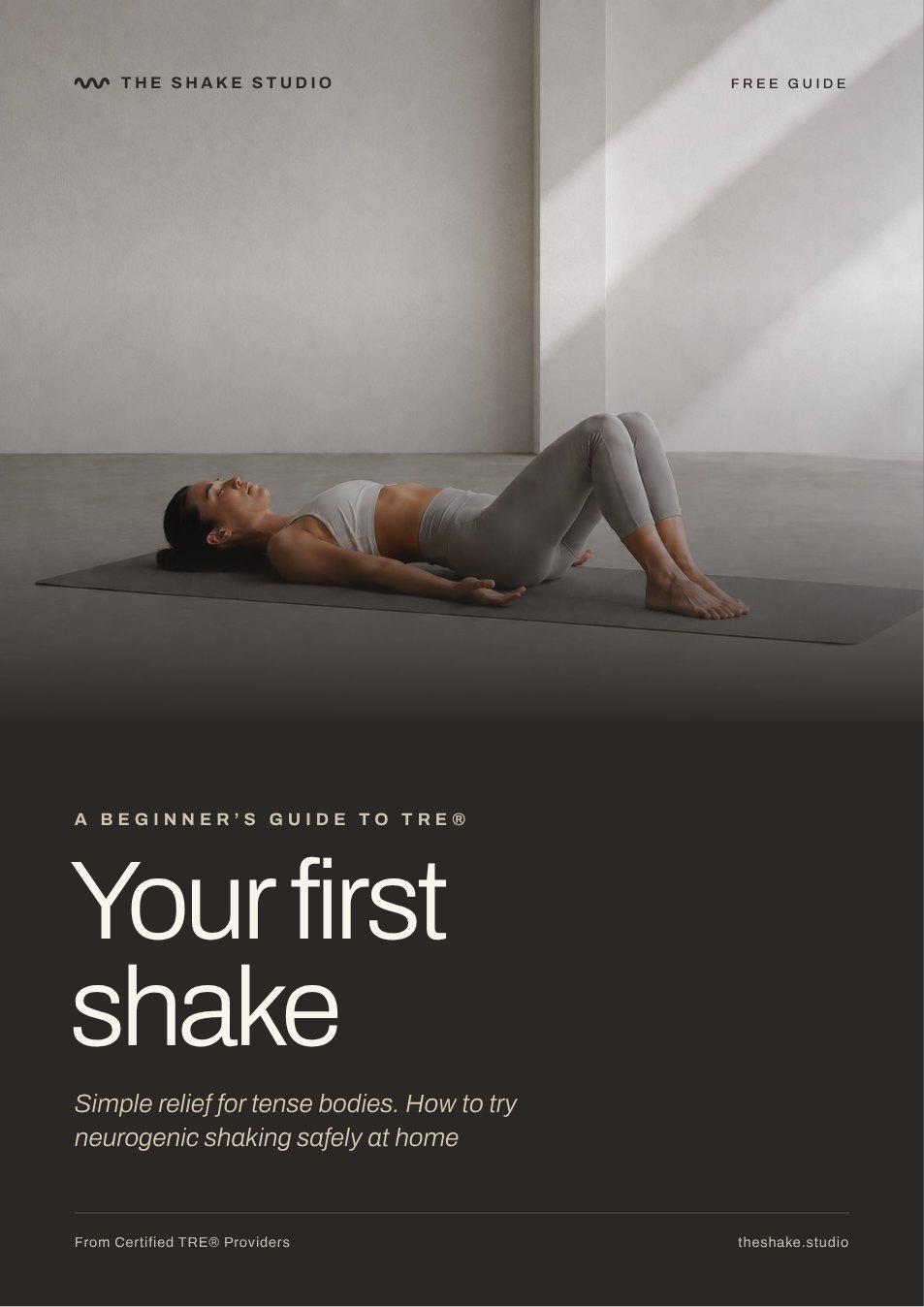
Is TRE Safe? What to Know Before You Start
Is TRE safe for beginners? Learn about possible experiences, self-regulation, precautions and when to seek professional guidance before trying TRE.
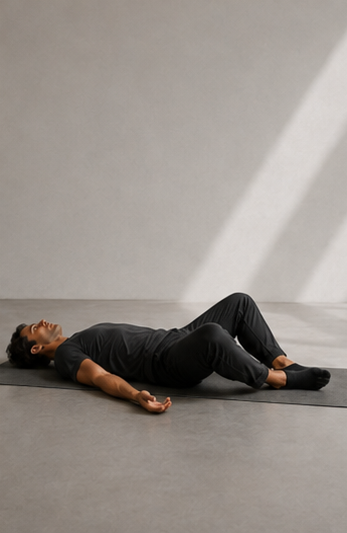
If you've come across TRE®, you may be curious about the idea of allowing your body to tremor as part of a movement-based wellbeing practice.
But you might also have questions.
Can the shaking become too intense? What if you feel emotional? Is it suitable for people who have experienced trauma? Can you practise it on your own?
These are sensible questions.
Any physical or body-focused practice deserves a thoughtful introduction, particularly when it involves changes in physical sensations and emotional experience.
Here's what you should know before getting started.
What happens during TRE?
TRE stands for Tension and Trauma Releasing Exercises.
Developed by Dr David Berceli, the practice involves seven preparatory exercises designed to encourage a self-induced tremoring response.
The exercises are followed by a period in which participants explore the tremoring response.
The intention is to learn how to allow, regulate and stop the movement.
The practice should not involve forcing the body to shake or pushing through discomfort.
The ability to stop is an important part of learning TRE.
Is TRE safe?
There is not yet a large enough body of high-quality research to make definitive claims about the safety of TRE for every population or clinical circumstance.
The available research is promising but relatively limited.
For example, a 2026 scoping review examined 22 studies of TRE and identified encouraging findings in several areas of wellbeing.
However, it also highlighted limitations in the evidence base. Read more in Does TRE actually work?
A 2025 randomised controlled trial investigated TRE in a small group of people with multiple sclerosis.
While useful, this study cannot establish universal safety for people with different medical or psychological conditions.
It is therefore important to distinguish between a practice being designed for self-regulation and having extensive clinical safety evidence.
What might you experience?
Experiences differ between individuals.
During a TRE session, you may notice:
- Gentle shaking in the legs.
- Tremoring around the hips or pelvis.
- Changes in muscle sensations.
- A feeling of physical relaxation.
- Tiredness following the session.
- Emotional responses.
- No noticeable tremoring at all.
None of these experiences should be treated as a measure of success.
More shaking does not mean more benefit.
You should not feel that you need to produce a particular movement or sensation.
Can TRE feel overwhelming?
It can be uncomfortable or emotionally challenging for some people.
Body-focused practices may bring attention to sensations that someone finds unfamiliar or difficult.
Some people may also experience anxiety when they notice involuntary movement.
This is why learning self-regulation is important.
You should be able to:
- Pause the exercises.
- Stop the tremoring.
- Change your position.
- Take a break.
- Decline to continue.
If you experience overwhelming emotional distress, dizziness, pain or other concerning symptoms, stop the practice.
If symptoms persist, seek appropriate professional advice.
Who should seek additional guidance?
TRE should not be approached as a one-size-fits-all exercise programme.
Speak with an appropriately qualified healthcare or mental health professional before starting if you:
- Have a significant neurological or medical condition.
- Have a history of seizures or unexplained episodes of loss of awareness.
- Experience severe or destabilising anxiety.
- Experience significant dissociation.
- Are currently dealing with an acute or recent traumatic experience.
- Have an injury or physical condition that could make the exercises unsuitable.
- Are unsure whether a body-focused practice is appropriate for you.
This is not an exhaustive list of formal contraindications. It is a cautious guide to circumstances where individual assessment matters.
People with complex needs may benefit from collaboration between their TRE provider and existing healthcare team.
Why is self-regulation so important?
The ability to stop is fundamental to a responsible approach to TRE.
You should never feel pressured to continue because someone tells you that discomfort means the process is working.
Nor should you be encouraged to increase the intensity simply to produce a stronger response.
A good introduction should explain the process, allow you to ask questions and make it clear that you remain in control of participation.
Should you learn TRE with a practitioner?
For beginners, learning with a suitably trained provider is a sensible starting point. Find out what happens in your first TRE session.
A practitioner can demonstrate the exercises, explain the tremoring response and help you understand how to regulate your experience.
Look for someone who:
- Has relevant TRE training and certification.
- Explains the limitations of the evidence.
- Does not promise to cure trauma or medical conditions.
- Respects your boundaries.
- Explains how to pause and stop.
- Encourages appropriate medical or psychological support when necessary.
You can find information about the certification pathway through TRE Global: explore TRE Global training and certification.
Is TRE suitable for everyone?
No.
Some people may find it interesting and comfortable. Others may decide that it is not right for them.
There is no obligation to practise TRE simply because it is different or popular.
You can explore other approaches, including walking, yoga, progressive muscle relaxation and conventional exercise.
The most important thing is finding an approach that is appropriate for your circumstances.
Our approach at The Shake Studio
We believe that wellbeing should be empowering, not pressurising.
TRE should be approached with curiosity, appropriate guidance and respect for individual differences.
We are interested in making this practice more accessible while being honest about its limitations.
You don't have to force a result, chase an experience or push beyond your comfort level.
Research and further reading
- Roos et al. (2026). TRE scoping review.
- Skovgaard et al. (2025). TRE randomised controlled trial.
- TRE Global. Provider certification information.
- NICE. PTSD treatment recommendations.
This article is educational and does not replace medical or psychological advice. TRE is a well-being practice, not a treatment.