What Happens in Your First TRE Session? A Beginner's Guide
Thinking about trying TRE? Discover what happens in your first session, how the exercises work, what tremoring feels like and how to prepare.
You've read about TRE®. Perhaps you've watched a video of someone experiencing the tremoring response, or heard someone describe how they felt afterwards.
Now you're thinking about trying it yourself.
But what actually happens in a TRE session?
Do you need to be flexible? Will your body definitely shake? What should you wear? And what if you feel uncomfortable?
Understanding what to expect can make the experience feel much more approachable.
Here's a guide to the first steps.
Before your first session
TRE stands for Tension and Trauma Releasing Exercises.
It was developed by Dr David Berceli and involves seven preparatory physical exercises designed to encourage a self-induced tremoring response.
Before starting, a good provider should explain the practice, ask about relevant health considerations and give you an opportunity to discuss any concerns.
You should never feel pressured to participate.
If you have a significant physical or mental health condition, relevant injuries, a history of dissociation or concerns about how you might respond, discuss suitability with an appropriate professional beforehand. Our article Is TRE safe? covers this in more detail.
What should you wear?
Choose comfortable clothing that allows you to move easily.
For example:
- Comfortable leggings or tracksuit bottoms.
- A T-shirt or loose top.
- Socks or bare feet, depending on the session.
- Comfortable clothing that does not restrict your movement.
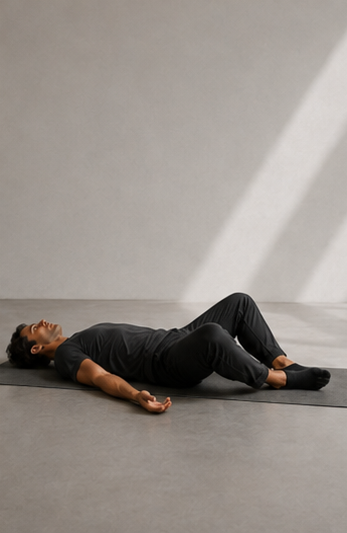
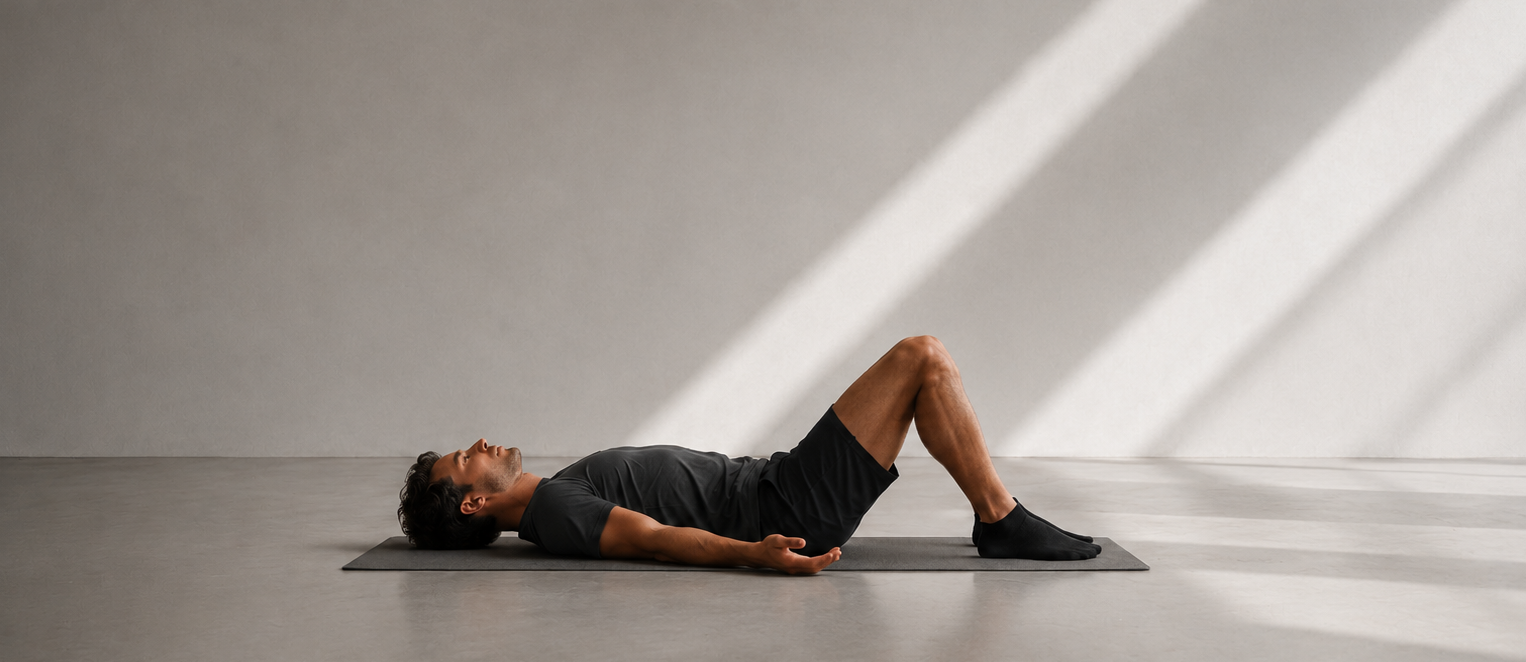
You may spend some of the session standing and some lying on a mat.
It is also useful to have water nearby.
What happens during the exercises?
The first part of TRE involves a sequence of preparatory movements.
These are designed to engage different muscle groups and prepare the body for the tremoring response.
The movements are generally performed at a manageable pace.
Your provider should explain each exercise and demonstrate the positions.
You do not need to perform everything perfectly.
The purpose is not to achieve an impressive physical performance.
What does the shaking feel like?
The experience varies.
Some people notice subtle movements in their legs.
Others experience more noticeable tremoring around the hips or pelvis.
You might notice a small movement that develops gradually, or you may not experience much tremoring at all.
The response is not something you should force.
There is no correct amount of shaking, and a stronger response does not indicate a better outcome.
Can you stop the shaking?
Yes.
Learning to regulate the process is a fundamental part of TRE.
A responsible introduction should teach you how to pause and stop the tremoring response.
You should be able to change position, take a break or end the exercise.
You are not expected to tolerate discomfort to complete a session.
What happens after the exercises?
A session will generally include time to rest and notice how you feel.
Your provider may invite you to reflect on your experience.
You might feel relaxed, tired, energised or simply unchanged.
There is no universal expected response.
Avoid making assumptions about what your experience means.
If you feel emotionally overwhelmed or physically unwell, tell your provider and stop the practice.
Do you need to be flexible?
You don't need to be an athlete or particularly flexible to explore TRE.
However, the preparatory exercises involve physical positions and movements that may need adapting.
If you have joint problems, pain, mobility limitations or an injury, discuss this before starting.
A provider should be willing to adapt the exercises where appropriate rather than expecting you to force your body into a particular position.
Should you practise at home afterwards?
It is sensible to learn the technique and its self-regulation principles with a suitably trained provider before practising independently.
Your first session is an opportunity to understand how the exercises work and whether the practice feels appropriate.
Don't assume that you need to practise for longer or more intensely to get a better result.
Follow the guidance you have been given and allow yourself time to assess your response. Our free PDF guide is a simple reminder of the exercises and positions to keep beside your mat.
What does the research say?
TRE research is developing.
A 2026 scoping review examined 22 studies and identified promising preliminary findings in several areas, including stress and mood.
However, the evidence remains limited by differences in study design and quality.
It is not established that one session will produce lasting improvements in stress, anxiety, sleep or trauma-related symptoms.
TRE is best approached as an emerging complementary wellbeing practice. Read more in Does TRE actually work?
How do you know if TRE is right for you?
You may enjoy TRE if you are curious about movement, physical awareness and exploring a different approach to wellbeing.
You may decide that it isn't for you, and that's perfectly reasonable.
There are many other ways to support physical and mental health, including walking, yoga, swimming, strength training and relaxation exercises.
The aim is to find something that suits your circumstances.
Your first step with The Shake Studio
At The Shake Studio, we want to make TRE easier to understand and more approachable.
We believe people should have access to clear information before trying something new.
No unrealistic promises. No pressure to produce a particular response. Just an opportunity to explore a different approach to movement and physical awareness.
Research and further reading
- Roos et al. (2026). TRE scoping review.
- Skovgaard et al. (2025). TRE randomised controlled trial.
- TRE Global. Find training and introductory classes.
- NHS. Stress and its symptoms.
This article is educational and does not replace medical or psychological advice. TRE is a well-being practice, not a treatment.