Why Does Your Body Shake? Understanding Stress, Tremors and TRE
Why do we shake when stressed, anxious or overwhelmed? Discover why the body trembles, what neurogenic tremors are and how TRE works.

Have you ever noticed your hands shaking before an important meeting?
Perhaps your legs trembled after an argument, or you experienced a sudden feeling of shakiness after a stressful situation.
It's a surprisingly common experience.
Shaking can happen when we're cold, physically exhausted, excited, frightened or anxious.
But why does it happen? And what does it tell us about the relationship between the body and stress?
To understand this, we need to look at how the body responds to demands and why trembling is not always something to suppress.
Why do we shake when we're stressed?
When your brain perceives a threat or significant demand, it can activate the body's stress response.
This is often referred to as the fight-or-flight response.
The sympathetic nervous system helps prepare the body for action.
Your heart rate may increase, breathing may change, and muscles become ready to respond.
You might notice:
- Shaking hands.
- Trembling legs.
- A tight chest.
- Muscle tension.
- A racing heartbeat.
- Restlessness.
- Difficulty concentrating.
These reactions are part of a complex physiological response.
Shaking can occur because stress-related activation affects muscle activity and the body's control of movement.
Importantly, trembling is not always psychological. It can also have medical causes, including medication effects, low blood glucose, neurological conditions and other physical issues.
New, persistent or unexplained tremors should be discussed with a healthcare professional.
Why do animals sometimes shake after stressful experiences?
You may have seen a dog shake its body after getting out of water or following an exciting encounter.
Animals use a range of movements and behaviours to respond to their environment.
It is tempting to interpret every shake as an intentional release of stress, but animal behaviour is complex. We cannot assume that a visible shaking movement tells us exactly what an animal is experiencing internally.
Nevertheless, observing natural movement in animals has inspired questions about the role of movement and tremoring in human stress management.
This is part of the background to interest in body-based practices such as TRE®.
What are neurogenic tremors?
Neurogenic tremors is a term used in the TRE approach to describe the tremoring response encouraged through its exercises.
TRE, or Tension and Trauma Releasing Exercises, was developed by Dr David Berceli.
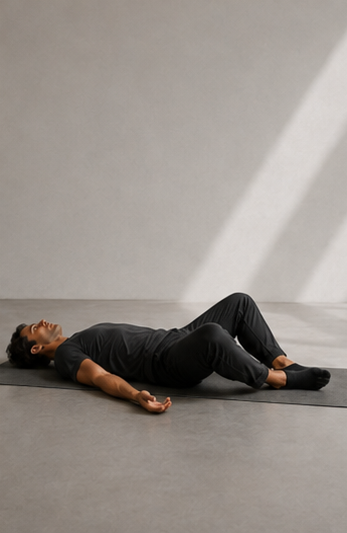
It involves a sequence of seven physical exercises designed to encourage a self-induced tremoring response.
The movements are not intended to be forced or performed as a fitness challenge.
Instead, the participant learns to allow and regulate the movement.
Some people experience subtle movements in their legs, while others notice more extensive tremoring.
The experience varies considerably.
Is shaking a way of releasing trauma?
This is where we need to be careful about the language we use.
You may see claims online that trauma is stored in the muscles and that shaking releases it from the body.
These descriptions can be useful metaphors for some people's experiences, but they are not established scientific explanations.
Trauma involves complex psychological, neurological, physiological and social processes.
There is growing interest in body-based approaches to wellbeing, but this does not mean that every tremor represents trauma leaving the body.
A 2026 scoping review of TRE research identified 22 studies and found promising preliminary results relating to stress, anxiety and other outcomes.
However, the researchers highlighted the limitations of the existing evidence and the need for further investigation.
It is more accurate to say that TRE explores a particular form of self-induced tremoring as part of a body-based approach to stress management.
What is the difference between normal trembling and TRE?
There are several different reasons why a person might shake.
| Type of shaking | Possible explanation |
|---|---|
| Shaking when cold | Muscular activity helps generate heat |
| Shaking during exercise | Muscles are responding to physical demands or fatigue |
| Shaking when anxious | Stress-related physiological activation |
| Essential tremor | A neurological movement disorder |
| TRE tremoring | A self-induced response explored through a structured exercise sequence |
These experiences should not be confused with one another.
TRE is a particular practice, not a general explanation for all forms of trembling.
Can you learn to work with your body's tremoring response?
Yes, TRE is designed to be taught as a self-regulated practice.
The exercises are introduced in sequence, with appropriate guidance on how to begin, pause and stop.
This is important because the aim is not to generate the strongest possible tremor.
It is to develop familiarity with the practice and remain within a manageable level of physical and emotional comfort.
A qualified TRE provider can help you understand the exercises and identify when the practice may not be appropriate.
If you experience unexpected shaking outside of the practice, particularly if it is new or accompanied by other symptoms, seek medical advice rather than assuming it is a stress response.
A different way of thinking about movement
We tend to think of movement as something we do deliberately.
We walk, run, lift, stretch and exercise.
TRE introduces a different experience: allowing movement to happen rather than directing every part of it.
For some people, this is an interesting way to explore physical awareness and relaxation.
At The Shake Studio, we believe movement deserves a bigger place in the conversation about wellbeing.
Not just movement that builds strength, endurance or flexibility, but movement that gives us another way to engage with our bodies.
Research and further reading
- Roos, L.A.J. et al. (2026). TRE: A Scoping Review.
- Cleveland Clinic. The fight-or-flight response.
- NHS. Stress and physical symptoms.
- Skovgaard, L. et al. (2025). TRE randomised controlled trial.
This article is educational and does not replace medical or psychological advice. TRE is a well-being practice, not a treatment.