Why Do We Hold Tension in Our Bodies?
Discover why stress can cause physical tension, where it commonly appears and how movement and relaxation can help you manage it.

You might not even realise you're doing it.
Your shoulders creep towards your ears while you work. Your jaw tightens when you're concentrating. Your stomach contracts when something makes you uncomfortable.
Then, when you finally stop, you notice how much tension you've been carrying.
Why does this happen? And why can it sometimes feel so difficult to relax?
The connection between stress and muscular tension is an important part of understanding how the body responds to everyday demands.
Why does stress create physical tension?
When you experience stress, your body can activate its physiological stress response.
This involves changes in several systems, including the autonomic nervous system.
Your heart rate may increase, your breathing may change and your muscles can become more activated.
This is part of the body's preparation to respond to a challenge.
The NHS identifies muscle tension and pain among the possible physical symptoms of stress.
In the short term, this response can be useful.
Problems may arise when stressful demands are frequent and opportunities for recovery are limited.
Where do we commonly notice tension?
Everyone experiences physical tension differently, but some common areas include:
Shoulders and neck
You might notice that you raise your shoulders while working, driving or concentrating.
Prolonged positioning, repetitive activity and stress can all contribute to discomfort.
Jaw
Some people clench their jaw or grind their teeth, particularly during sleep or periods of concentration.
Persistent jaw discomfort or tooth damage should be discussed with a dentist.
Back
Back discomfort can have many causes, including muscular, joint-related and neurological factors.
Stress may influence how we experience pain, but it is not the only explanation.
Abdomen
Some people notice changes in abdominal comfort during stressful periods.
The gut and nervous system communicate through complex pathways, which is one reason stress can influence digestive symptoms.
Persistent abdominal symptoms should be medically assessed.
Hips and pelvis
The hips and pelvis are involved in a wide range of movements and postures.
Some people notice tightness or discomfort in these areas, particularly after prolonged sitting or physical activity.
Again, this does not mean that a particular emotion is stored in a particular muscle.
Why is it sometimes difficult to relax?
Physical relaxation isn't always something we can achieve simply by deciding to do it.
You might know that you're safe and that the working day is over, yet still notice tension.
This may reflect a combination of habitual muscular activity, ongoing stress, physical discomfort and other individual factors.
It can take time to recognise patterns that have become automatic.
The first step is often simply noticing them.
Five ways to work with physical tension
1. Change position regularly
If you spend much of your day sitting, introduce regular opportunities to stand and move.
You don't need a complicated stretching programme.
A short walk around the room can be enough to change your position and introduce movement.
2. Try progressive muscle relaxation
Gently tense and release different muscle groups.
Notice how your body feels before and after each release.
This is a recognised relaxation technique recommended by NHS inform.
3. Explore gentle movement
Walking, stretching and mobility exercises can help you explore comfortable movement.
Choose activities that feel appropriate for your body.
4. Make space for recovery
A demanding day can leave very little time for physical and mental recovery.
Try creating a short period without screens, messages or other demands.
5. Explore TRE
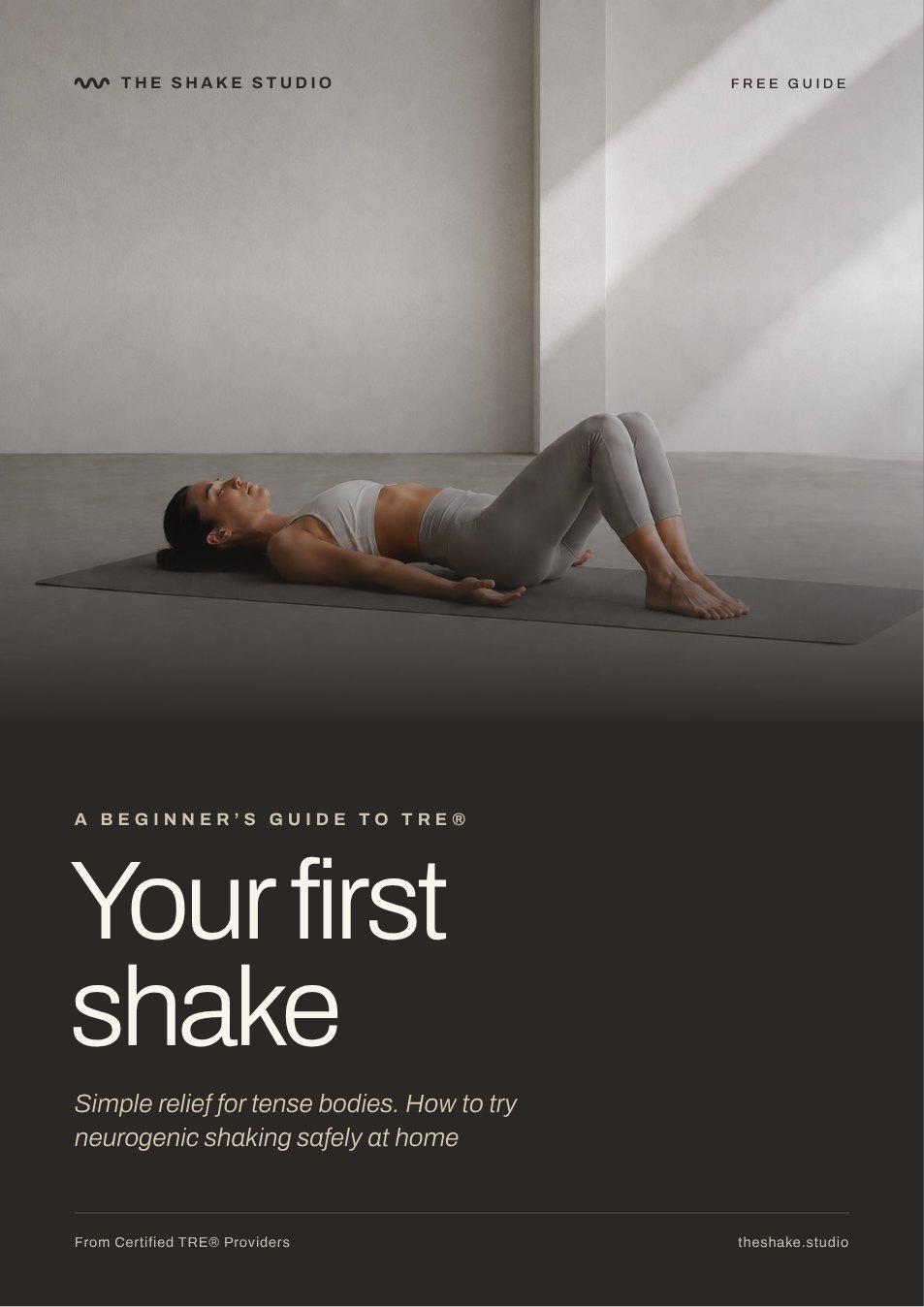
TRE is a structured body-based practice involving seven exercises designed to encourage a self-induced tremoring response.
It provides an alternative way of exploring movement and physical sensations.
A 2026 scoping review examined 22 TRE studies and found promising preliminary results, while highlighting the need for more rigorous evidence.
It is not established that TRE removes stored tension or trauma from the body.
Its potential role in wellbeing should be understood in the context of the emerging research.
Does everyone hold stress in the same way?
No.
Two people can experience similar situations but have very different physical responses.
One might notice jaw tension. Another might experience stomach discomfort or difficulty sleeping.
Our responses are influenced by many factors, including health, previous experiences, environment, lifestyle and individual differences.
This is why there isn't one universal exercise for releasing tension.
Start by noticing, not forcing
You don't need to fight your body or push yourself into uncomfortable positions.
You can begin by noticing when tension appears, changing position, introducing gentle movement and making space for recovery.
At The Shake Studio, we believe that physical awareness deserves more attention in everyday wellbeing.
Sometimes the most useful thing is not another performance target.
It's learning to notice what is happening in your body.
Research and further reading
- NHS. Stress and its symptoms.
- NHS inform. Progressive muscle relaxation.
- World Health Organization. Physical activity.
- Roos et al. (2026). TRE scoping review.
This article is educational and does not replace medical or psychological advice. TRE is a well-being practice, not a treatment.