Why Can't I Switch Off After Work?
Struggling to switch off after work? Discover why stress follows you home and seven practical ways to create better recovery habits.

You've closed your laptop. The working day is technically over.
But your mind hasn't got the message.
You're still thinking about the meeting, replaying a conversation or worrying about tomorrow's workload. You might find yourself checking emails even though you promised yourself you wouldn't.
Perhaps you're physically exhausted but strangely restless.
If this sounds familiar, you're not alone.
Stress can affect how we think, feel, behave and function physically. The NHS lists difficulty concentrating, constant worrying, muscle tension and changes in sleep among its possible symptoms.
Understanding why switching off can be difficult is the first step towards creating a better relationship with work and recovery.
Why does work stress follow you home?
Work doesn't always end when you leave the building.
Your attention can remain occupied by unfinished tasks, difficult interactions and decisions that haven't been resolved.
There are several reasons this happens.
1. Your brain is still processing the day
You may continue thinking about events even when you're no longer actively working.
This can involve replaying conversations, anticipating problems or mentally preparing for tomorrow.
2. You haven't created a transition
If you move directly from a demanding working day into household responsibilities, caring duties or more screen time, there may be very little opportunity to pause.
3. Your physical tension hasn't disappeared
Stress can involve changes in muscle tension, heart rate and breathing.
Even when the original demand has passed, you might still notice physical discomfort.
4. Your recovery time is being interrupted
Notifications, messages, news and social media can make it difficult to create periods without demands.
Rest can become another activity competing for your attention.
Seven ways to switch off after work
1. Create a transition ritual
Give yourself a deliberate boundary between work and home.
It could be a short walk, changing your clothes, listening to music or taking a shower.
The activity doesn't need to be elaborate.
What matters is creating a repeatable transition that helps you move into a different part of the day.
2. Get outside
A walk after work can combine physical activity with a change of environment.
It can also create some distance between your working space and your home life.
You don't need to make it a workout.
Leave your headphones at home occasionally and notice what is happening around you.
3. Move your body
If you've spent much of the day sitting, gentle movement may help you feel more physically comfortable.
Try walking, stretching, cycling or another activity you enjoy.
The WHO recommends regular physical activity because of its benefits for physical and mental health.
4. Stop checking work notifications
If possible, establish a clear boundary around work messages.
You might decide that you don't check emails after a particular time unless your role genuinely requires it.
Reducing unnecessary interruptions can make it easier to protect your personal time.
5. Try a physical relaxation exercise
Progressive muscle relaxation involves gently tensing and releasing different muscle groups.
This can help you become more aware of physical tension.
You could also try gentle mobility work, restorative movement or a comfortable stretching routine.
6. Explore body-based wellbeing
Some people find that talking, writing or meditation helps them process a demanding day.
Others prefer physical approaches.
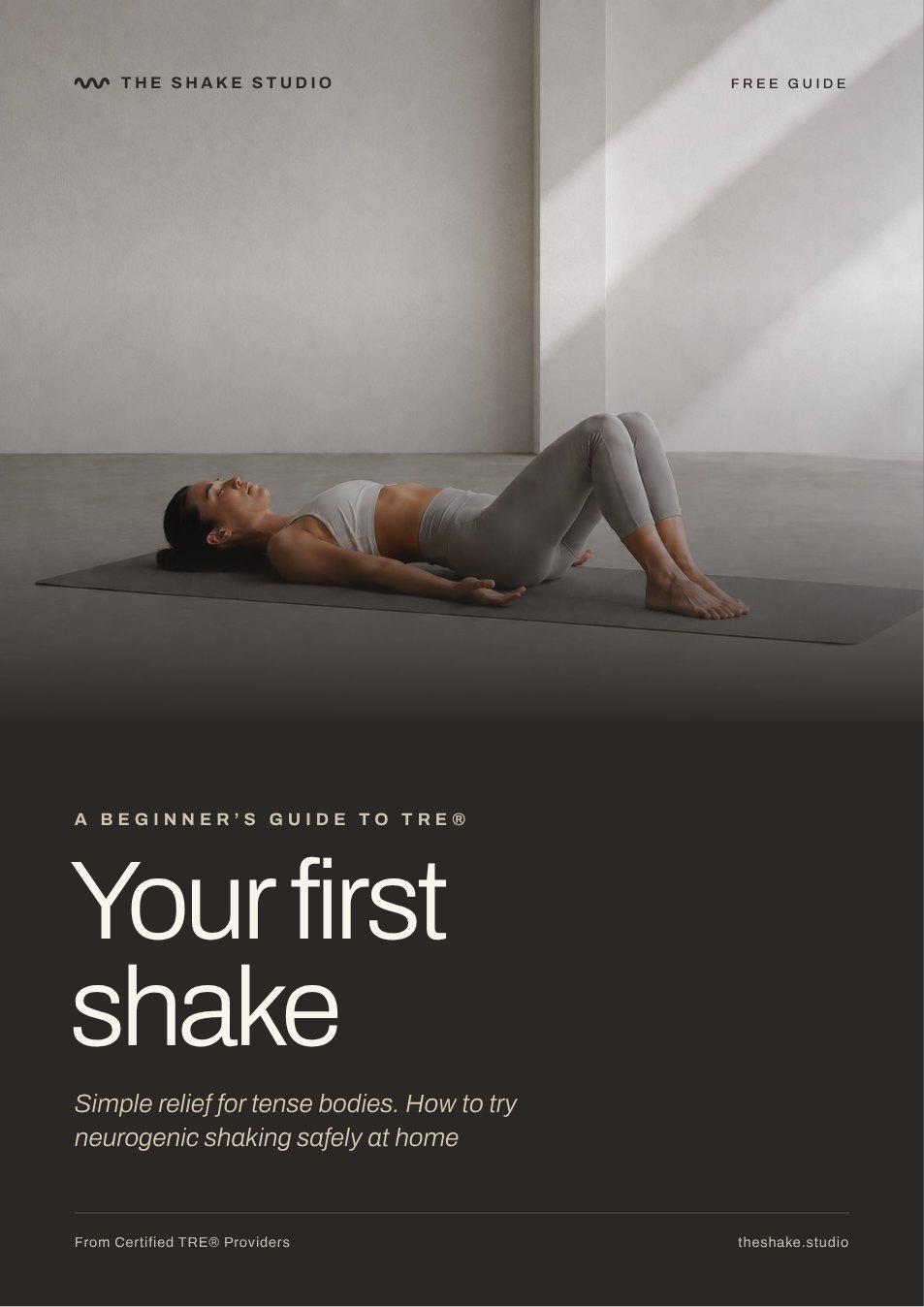
TRE®, or Tension and Trauma Releasing Exercises, is one such approach. It involves a sequence of physical exercises designed to encourage a self-induced tremoring response.
TRE research is still developing. A 2026 scoping review identified 22 studies and found promising preliminary results, while highlighting the need for better-quality research.
It is not a guaranteed way to eliminate work stress, but it offers another approach to exploring physical tension.
7. Protect your sleep routine
A consistent wind-down routine can help create a more predictable transition into sleep.
The NHS recommends relaxing before bed, keeping a consistent waking time and making your bedroom dark and quiet.
Try reading, taking a bath or doing a gentle relaxation exercise.
Recovery isn't something you have to earn
One of the problems with modern working life is that recovery can feel like a reward for completing everything.
But the list never ends.
There is always another email, another task or another responsibility.
Recovery needs to be part of the routine rather than something you get around to when everything else is finished.
That might mean protecting a few minutes of uninterrupted time, moving your body, going outside or finding a practice that helps you reconnect with your physical experience.
A different approach to switching off
At The Shake Studio, we're interested in the physical side of stress and recovery.
We believe movement can have a place in everyday wellbeing, not just in fitness routines or organised exercise.
TRE is one way to explore that relationship.
You don't need to be an athlete, a meditation expert or someone who has spent years studying wellbeing.
You simply need curiosity and a willingness to explore a different approach.
Research and further reading
- NHS. Stress: symptoms and support.
- NHS. Insomnia and improving sleep.
- World Health Organization. Physical activity.
- Roos et al. (2026). TRE scoping review.
This article is educational and does not replace medical or psychological advice. TRE is a well-being practice, not a treatment.