How to Release Stress From Your Body: 7 Practical Approaches
Discover why stress affects your body and explore practical ways to release physical tension, improve relaxation and support your wellbeing.

Stress isn't just something that happens in your head.
You might recognise it in your shoulders, which seem permanently raised. Your jaw, which you catch yourself clenching. Your stomach, which feels uncomfortable during busy periods. Or the restless feeling that follows you home from work.
You can finish the working day, close your laptop and leave the office, yet still feel as though your body hasn't received the message.
This is because stress involves the whole body.
The NHS identifies muscle tension, headaches, dizziness, stomach problems, changes in heart rate and sleep difficulties among the physical symptoms of stress.
Understanding this connection is important because managing stress isn't necessarily just about changing your thoughts. It can also involve changing how you move, rest and relate to your body.
Here are seven approaches worth exploring.
1. Move your body
Physical activity is one of the most well-established ways to support mental and physical health.
According to the World Health Organization, regular physical activity is associated with reduced symptoms of anxiety and depression, improved sleep and better overall wellbeing.
Movement doesn't have to mean an intense gym session.
Walking, cycling, swimming, dancing and gentle mobility exercises can all contribute.
If you spend most of your day sitting, even introducing short periods of movement throughout the day can be a useful starting point.
The key is consistency rather than intensity. Read more in Can movement improve your mental health?
2. Try progressive muscle relaxation
One reason we sometimes struggle to relax is that we don't realise how much tension we are holding.
Progressive muscle relaxation is a technique that involves deliberately tensing and then relaxing different muscle groups.
For example:
- Gently tense your hands.
- Hold briefly.
- Release.
- Notice the difference.
- Repeat with your shoulders, legs and other comfortable muscle groups.
The technique can help you recognise the difference between muscular tension and relaxation.
NHS inform provides guidance on progressive muscle relaxation and how to practise it.
It can be particularly useful for people who find that they carry tension without noticing.
3. Use your breathing
Breathing is something you do automatically, but you can also influence it deliberately.
When stressed, some people notice that their breathing becomes faster or shallower.
A simple breathing practice can help create a pause in the middle of a busy day.
Try this:
- Find a comfortable position.
- Allow your shoulders to relax.
- Breathe gently through your nose if comfortable.
- Let your exhale be slow and unforced.
- Continue for a few minutes.
You don't need to take exaggeratedly deep breaths.
The NHS recommends regular, gentle breathing exercises as one way of managing stress, anxiety and panic.
If concentrating on your breathing makes you uncomfortable, choose another grounding or movement-based activity instead.
4. Explore body-based practices
Sometimes the most useful way to approach stress is through physical experience rather than talking or thinking.
This is the general idea behind somatic or body-based practices.
These approaches can include:
- Gentle movement.
- Body awareness exercises.
- Yoga.
- Progressive relaxation.
- Mindful walking.
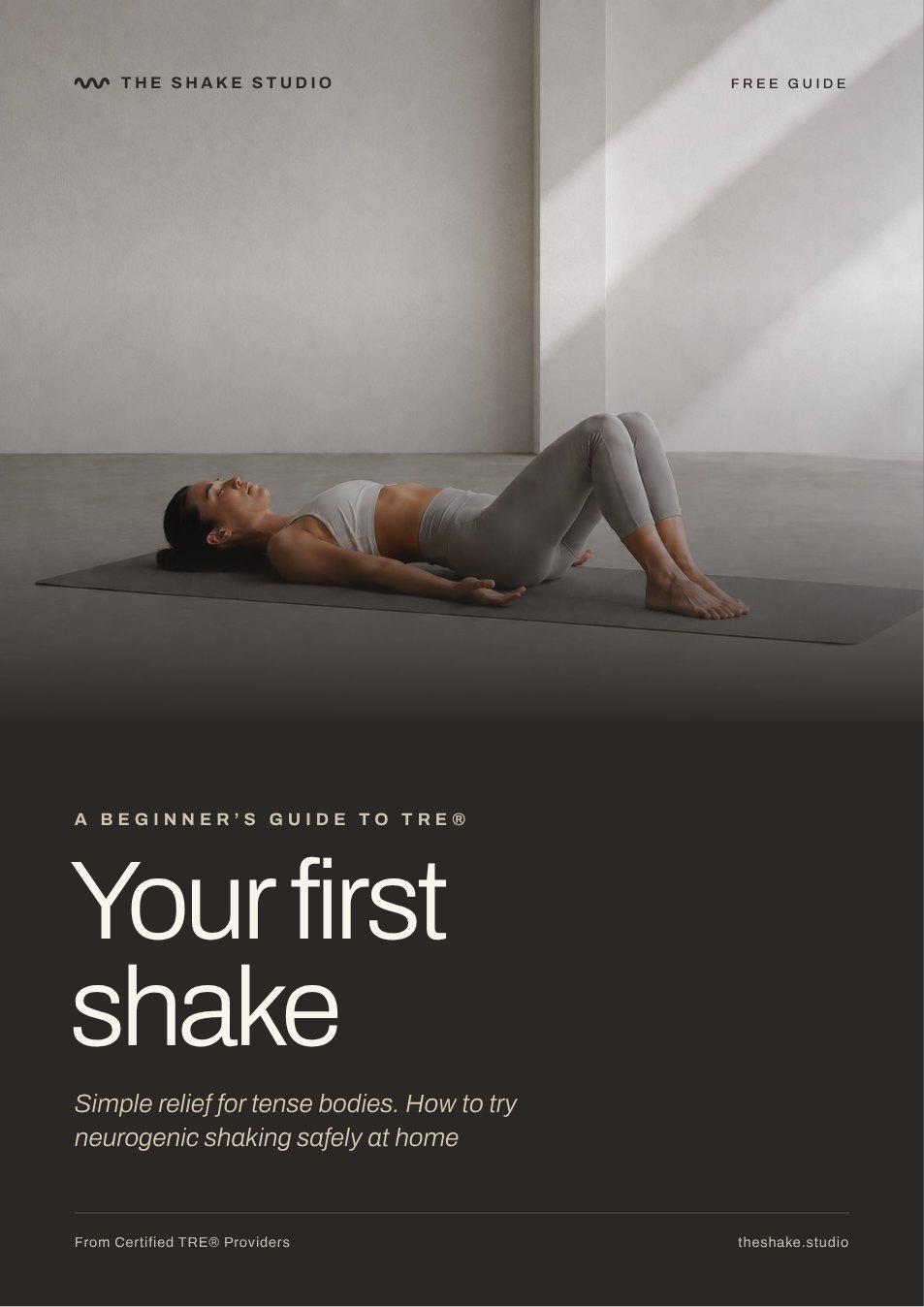
- Tension and Trauma Releasing Exercises (TRE).
TRE is a particular method involving seven preparatory exercises designed to encourage a self-induced tremoring response.
Some practitioners and participants report that the practice helps them feel more physically relaxed.
Research is still developing. A 2026 scoping review identified 22 TRE studies and found promising but preliminary findings relating to stress, anxiety and other outcomes.
It is worth remembering that TRE is not a proven treatment for trauma or a guaranteed way to remove stored stress.
Its value is best explored as an individual, self-regulated wellbeing practice.
5. Take recovery seriously
We often think about stress management as something we should fit into the gaps between everything else.
But recovery deserves its own space.
If your days involve constant notifications, decision-making, meetings and responsibilities, your mind and body may benefit from periods without demands.
Try creating a transition between work and home.
It could be:
- A walk without headphones.
- Ten minutes of gentle movement.
- A shower.
- A few minutes lying comfortably on the floor.
- Listening to music without looking at your phone.
The point isn't to create another productivity routine.
It's to create a genuine opportunity to pause.
6. Get outside
Spending time outdoors can be a useful way to interrupt the pattern of sitting, working and staring at screens.
Walking in green spaces combines physical activity with a change of environment.
The WHO's physical activity guidance recognises the importance of movement for both physical and mental health.
You don't need to turn every walk into a fitness challenge.
Sometimes the best approach is simply to go outside, walk at a comfortable pace and pay attention to your surroundings.
7. Find a practice you actually enjoy
Perhaps the most important part of stress management is finding something you will realistically continue doing.
A practice that requires enormous motivation is unlikely to become a regular part of your life.
Some people enjoy meditation. Others prefer running, swimming, yoga or strength training.
Others are interested in body-based approaches such as TRE.
There isn't one universal solution.
Experiment, pay attention to how you respond and avoid turning wellbeing into another source of pressure.
Why physical stress relief matters
Stress is a normal part of life. It becomes more difficult when it is persistent, overwhelming or starts affecting everyday functioning.
We cannot always remove the things that create stress. Work, relationships, responsibilities and unexpected events are part of being human.
But we can develop ways of responding to stress.
That might mean moving more, taking proper breaks, improving sleep habits, learning relaxation techniques or exploring a new relationship with physical tension.
At The Shake Studio, we believe that movement deserves a bigger place in the conversation about wellbeing.
You don't always need to sit still, think differently or push harder.
Sometimes you need to move.
Research and further reading
- NHS. Stress: symptoms and things you can try.
- World Health Organization. Physical activity and its health benefits.
- NHS inform. Progressive muscle relaxation.
- NHS. Breathing exercises for stress.
- Roos et al. (2026). TRE scoping review.
This article is educational and does not replace medical or psychological advice. TRE is a well-being practice, not a treatment.