How to Regulate Your Nervous System: Practical Ways to Feel Calmer
Learn how the nervous system responds to stress and discover practical ways to support relaxation, physical recovery and emotional wellbeing.

You know the feeling.
You've finished work, you're finally home, and technically there's nothing urgent to do.
But you still feel switched on.
Your mind is racing. Your shoulders are tight. You keep checking your phone. Even when you sit down, you don't quite feel relaxed.
This is one reason the nervous system has become such an important part of conversations about stress and wellbeing.
Understanding how the nervous system responds to everyday demands can help us make better decisions about movement, recovery and relaxation.
But what does nervous system regulation actually mean, and what can you do to support it?
What is the nervous system?
The nervous system is the body's communication and control network.
It includes the brain, spinal cord and nerves, helping coordinate everything from movement and sensation to internal bodily functions.
One particularly important part is the autonomic nervous system.
This system helps regulate functions that happen largely without conscious effort, including heart rate, digestion and aspects of breathing.
It is commonly described in terms of two interconnected branches:
The sympathetic nervous system is involved in mobilising the body for action. It contributes to the familiar fight-or-flight response.
The parasympathetic nervous system is involved in functions associated with rest, digestion and recovery.
These systems are not simply an on/off switch. They work together to help the body respond to changing circumstances.
What happens when you experience stress?
Imagine you're preparing for an important presentation.
You might notice your heart beating faster, your muscles becoming tense and your attention narrowing towards the task.
This is a normal stress response.
The body is preparing to respond to a perceived demand.
The problem isn't that we have this response. It's essential.
Difficulties can arise when stress becomes persistent and we have limited opportunities for recovery.
The NHS identifies physical symptoms such as muscle tension, stomach problems, headaches and changes in sleep among the possible effects of stress.
You may also notice irritability, difficulty concentrating or feeling overwhelmed.
What does nervous system regulation mean?
Nervous system regulation is a broad term used to describe the body's ability to respond to demands and move between different states of activation and recovery.
It doesn't mean being calm all the time.
Nor does it mean eliminating anxiety, never feeling stressed or maintaining a permanently relaxed state.
A healthy stress response is flexible.
You need to be able to become alert when something requires your attention, but also to recover when the demand has passed.
The goal is not permanent relaxation. It's greater flexibility.
Five practical ways to support your nervous system
1. Move regularly
Movement is one of the simplest ways to support your overall wellbeing.
Walking, cycling, swimming and other forms of physical activity have established benefits for mental and physical health.
The WHO recommends that adults aim for 150–300 minutes of moderate-intensity aerobic activity each week, or an equivalent combination of moderate and vigorous activity.
You don't need to achieve this immediately.
Start with something manageable and build consistency.
2. Develop a breathing practice
Gentle breathing exercises can help some people manage stress and anxiety.
The NHS recommends breathing exercises that involve breathing gently and regularly, without forcing the breath.
Try spending five minutes in a comfortable position, allowing your breathing to slow naturally.
If breath-focused practices feel uncomfortable, you can instead focus on your feet on the ground, the room around you or a gentle walk.
3. Make space for physical relaxation
Many people are unaware of how much muscular tension they carry.
Progressive muscle relaxation is one way to become more aware of this.
It involves gently tensing and releasing muscle groups, noticing the difference between the two sensations.
Other approaches include gentle stretching, mobility exercises and restorative movement.
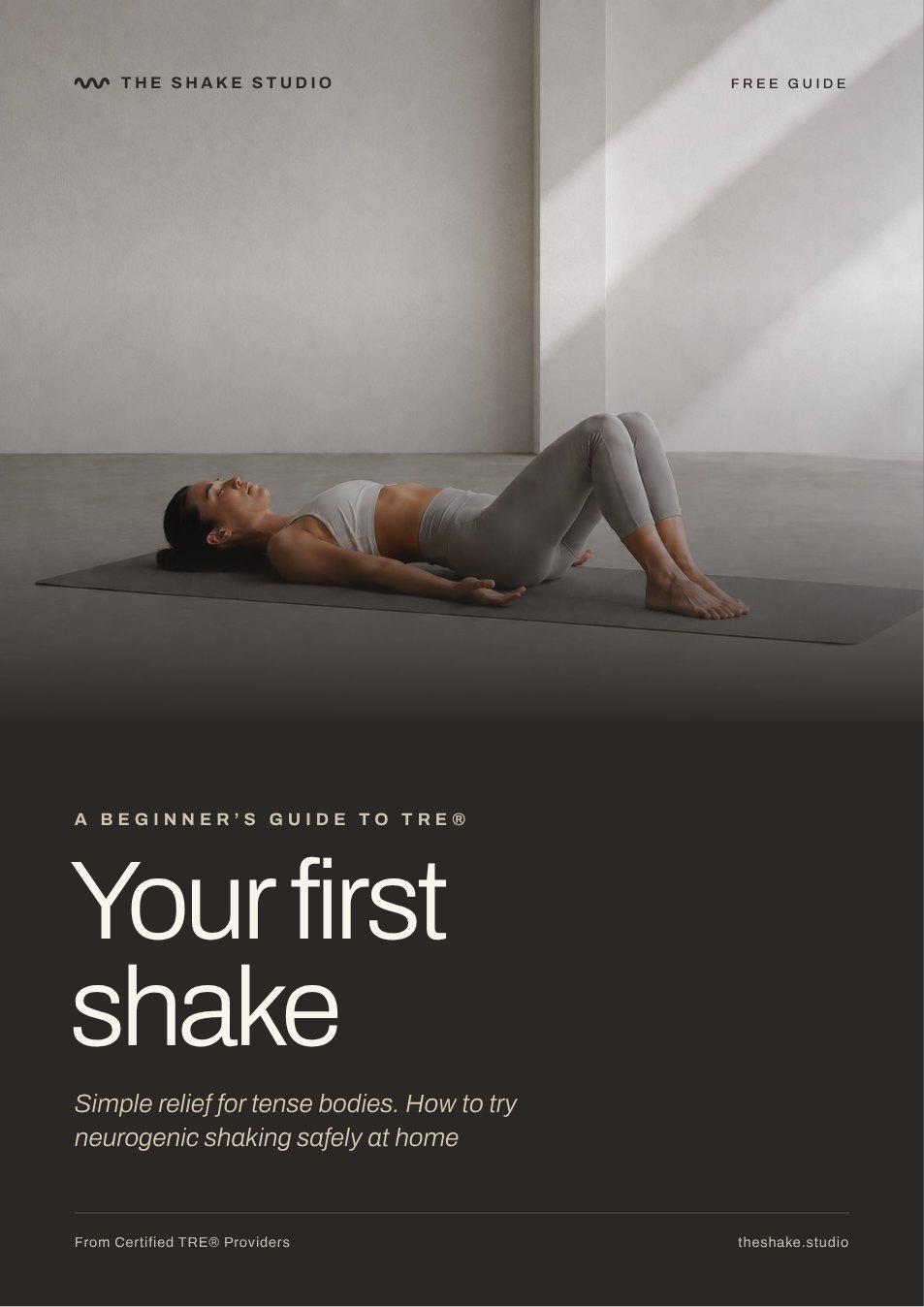
4. Explore TRE
Tension and Trauma Releasing Exercises is a body-based practice developed by Dr David Berceli.
It uses a sequence of seven preparatory exercises designed to encourage self-induced tremoring.
The practice is based on the idea that working with the body's natural tremoring response may provide another way of approaching physical tension and stress.
The research is promising but still developing.
A 2026 scoping review identified 22 studies, reporting potential benefits across several areas, including stress and anxiety-related outcomes. The review also emphasised limitations in study quality and the need for further research.
TRE should therefore be understood as an emerging complementary wellbeing practice, rather than an established medical treatment for nervous system dysfunction or trauma.
5. Prioritise sleep and recovery
Recovery is not a luxury.
Sleep, rest and regular periods away from demanding activities are important parts of maintaining health.
Try creating a consistent wind-down routine.
You could reduce screen use before bed, take a gentle walk in the evening, practise progressive muscle relaxation or spend a few minutes doing something enjoyable.
The most useful routine is one that fits into your actual life.
Can you reset your nervous system?
The phrase 'nervous system reset' is popular in the wellness industry.
It can be a useful metaphor for taking a break and supporting recovery, but it isn't a precise medical description of what happens inside your body.
There is no single exercise that permanently resets your nervous system.
Your nervous system is constantly adapting to internal and external information.
The more useful goal is to develop habits that support recovery, flexibility and a greater awareness of how you respond to stress.
Why The Shake Studio takes a physical approach to wellbeing
At The Shake Studio, we are interested in what happens when we approach wellbeing through movement.
Not every useful practice needs to involve sitting still, analysing thoughts or following another complicated routine.
TRE offers an opportunity to explore a different relationship with physical tension.
It's a practical, movement-based approach that you can learn with appropriate guidance and adapt to your own comfort level.
We believe there should be more ways to explore wellbeing, particularly for people who find traditional mindfulness approaches difficult to connect with.
Research and further reading
- NHS. Understanding stress.
- Cleveland Clinic. What happens during the fight-or-flight response?.
- World Health Organization. Physical activity guidelines.
- Roos, van Niekerk & Tönsing (2026). Trauma Releasing Exercises: A Scoping Review.
- NHS. Breathing exercises for stress.
This article is educational and does not replace medical or psychological advice. TRE is a well-being practice, not a treatment.